The Longevity Journal
Omega-3s After 50: What the Evidence Actually Says
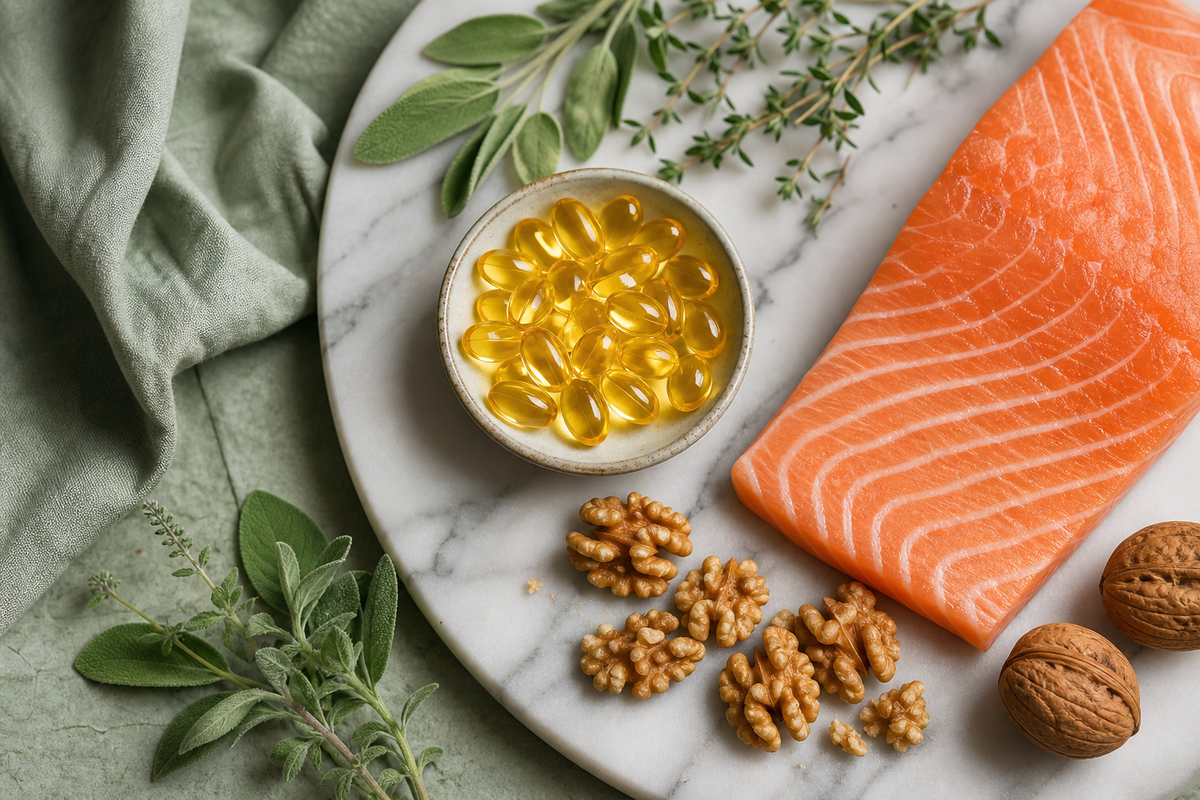
Few supplements have ridden the hype cycle quite like omega-3 fish oil — miracle one decade, useless the next. The truth, as usual, is quieter and more useful than either headline.
What omega-3s are
The two that matter are EPA and DHA, long-chain fatty acids found mainly in oily fish. They are structural components of cell membranes and precursors to molecules that regulate inflammation. DHA in particular is concentrated in the brain and the retina.
Where the evidence is strongest
The clearest signal is for triglycerides: omega-3s reliably lower them, sometimes substantially, at high doses. There is reasonable support for cardiovascular benefit in people who eat little fish, and ongoing interest in their role in preserving cognitive and eye health with age.
The large trials that "found nothing" mostly studied well-nourished populations at low doses. Absence of a large effect in people who were already replete is not the same as absence of an effect in people who are short.
The people most likely to benefit are the ones eating the least oily fish.
Practical guidance
Food first
Two servings of oily fish a week — salmon, sardines, mackerel — covers most people. Supplements are exactly that: a supplement to fill a gap, not a replacement for the plate.
If you supplement
Look at the EPA + DHA content, not the total fish-oil weight. A common general range is 1–2 grams of combined EPA and DHA per day. Store it cool, and if it tastes strongly of fish it may be oxidized — a fresher product is worth it.
And the standard, non-negotiable note: omega-3s can thin the blood slightly, so if you take anticoagulants or are heading for surgery, talk to your doctor first. This is general information, not a prescription.
The bottom line
Omega-3s are neither a miracle nor a scam. For someone over 50 who rarely eats oily fish, a sensible dose is one of the more defensible additions to a longevity routine — especially with elevated triglycerides. Eat the fish if you can; supplement the gap if you cannot.