The Longevity Journal
The 8 Foods Centenarians Eat Most Often
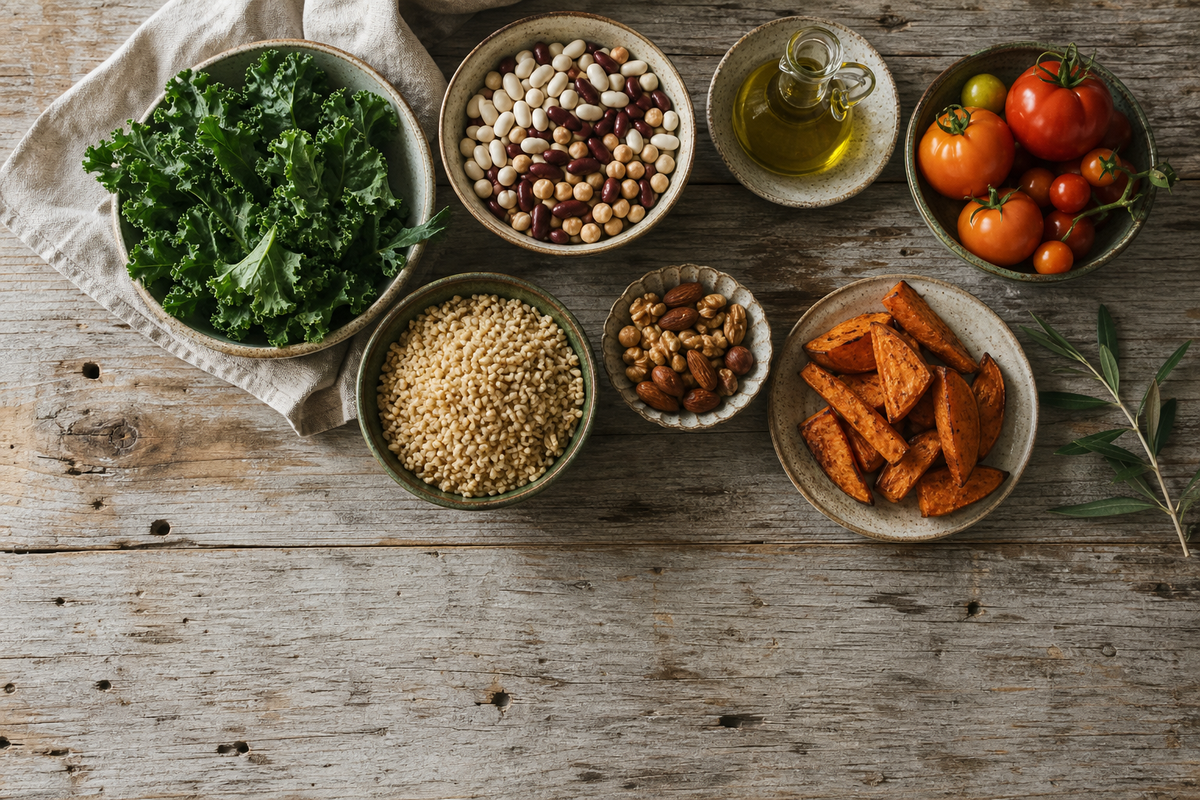
Ask what the world's centenarians actually eat and the answer is almost disappointing: beans and legumes, leafy greens, whole grains, nuts, tubers like sweet potato, olive oil, fermented foods, and a rotating cast of herbs, tea, and a little fruit. Not one of these is expensive. Most of it was peasant food a century ago, and much of it still is.
No single food explains a hundred-year life, and anyone selling you one is selling. What the long-lived communities share is a pattern: mostly plants, simple preparation, modest portions, and almost no ultra-processed food — because for most of their lives, it did not exist where they lived.
Different villages, same pattern
Okinawa, Sardinia, Ikaria, Nicoya, and Loma Linda do not eat the same menu. Okinawans historically leaned on sweet potatoes and soy; Sardinians on barley bread, beans, and a little cheese; Ikarians on wild greens and olive oil. The overlap is not the ingredients. It is the shape of the diet — plants doing the heavy lifting, meat as a garnish or a festival food, and meals cooked at home from things with no label to read.
Centenarian food is ordinary food, eaten consistently for fifty years.
The eight staples
1. Beans and legumes
Lentils, chickpeas, black beans, fava beans, soy. If there is one food every long-lived community agrees on, this is it. Beans deliver plant protein, slow carbohydrate, minerals, and above all fiber — which pays off in cholesterol, blood sugar, fullness, and a well-fed gut microbiome.
2. Leafy and garden greens
Spinach, chard, cabbage, wild greens picked from a hillside, whatever the garden gives. Greens bring potassium, folate, magnesium, vitamin K, and nitrate, and they make a plate feel generous without much in the way of calories.
3. Whole grains
Barley in Sardinia, corn tortillas in Nicoya, oats, rye, brown rice, dense sourdough breads elsewhere. The grain stays close to its original form and shows up next to beans and vegetables — not as a sweetened snack in a bright wrapper.
4. Nuts
A daily handful, not a bowl. Nuts are dense with unsaturated fat, magnesium, vitamin E, and fiber, and they earn their keep mostly by what they replace: the refined snack you would have eaten instead.
5. Sweet potatoes and other tubers
Filling, cheap, and endlessly versatile — which is why tubers have fed traditional societies everywhere. In Okinawa, purple and orange sweet potatoes were for decades the center of the diet, supplying carbohydrate, fiber, potassium, and the pigments that make them worth photographing.
6. Olive oil
In the Mediterranean zones, extra-virgin olive oil goes on nearly everything. It carries monounsaturated fat and polyphenols, but its quiet superpower is behavioral: vegetables dressed in good olive oil get eaten.
7. Fermented foods
Miso and natto in Japan, yogurt and kefir where dairy is traditional, sauerkraut, tempeh. Fermentation adds flavor, keeps food through winter, and may support microbial diversity in the gut — a fringe benefit centenarians got without ever using the word microbiome.
8. Herbs, tea, and a little fruit
Wild herbs, mountain teas, coffee, seasonal fruit eaten whole. Pleasure and plant compounds, without the diet tipping into juice and dessert.
What to copy — and what to leave in the village
- Make beans or lentils a weekly anchor, not an occasional side.
- Get greens or other vegetables into most meals, and use olive oil to make that easy.
- Choose intact or minimally refined grains most of the time.
- Let nuts, fermented foods, tea, and fruit fill the gaps where snacks and sugary drinks used to be.
You do not need to reconstruct an Okinawan menu in a northern winter. Climate, budget, culture, and your own digestion all get a vote — and if you are managing diabetes, kidney disease, or a food allergy, a dietitian can help you translate the pattern rather than fight it. The transferable idea is calmer than any menu: plants first, meals mostly made at home, portions that leave you steady rather than stuffed.
Start with one staple. A pot of beans on Sunday, greens with dinner, whatever you will actually repeat. Then let it become boring. Boring, repeated for decades, is the whole trick.